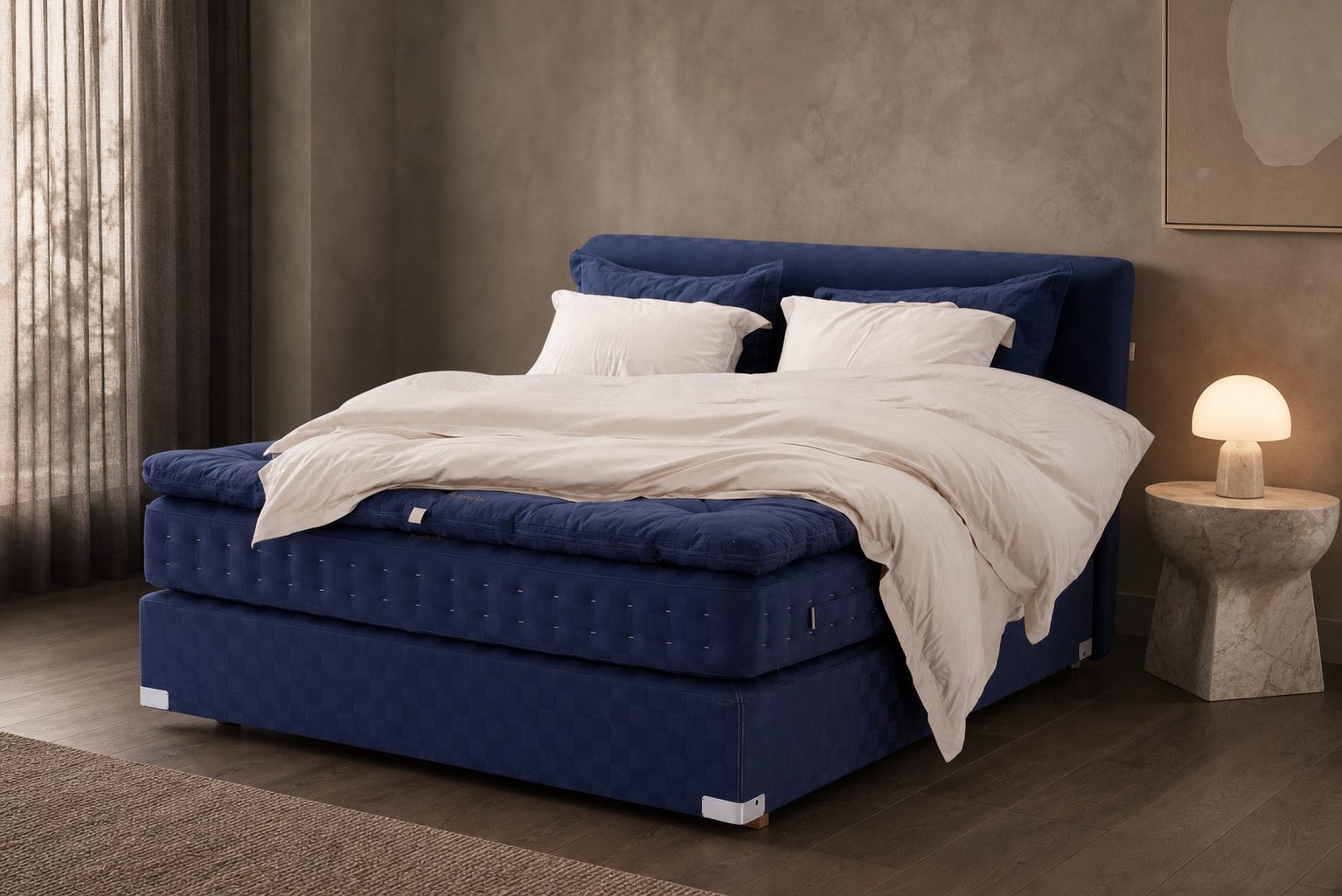
We spend a third of our lives on a mattress, yet it is often the least considered piece of furniture we own. Most are made the same way: rolled off a production line, compressed into a box and sold on a single number. A handmade mattress is a different object entirely — built slowly, in layers, and finished by hand.
If you have only ever bought a mass-produced mattress, the difference can be hard to picture. This guide explains what handmade actually means in a mattress, what goes on inside a fine one, and how to choose the right mattress when you buy directly from the maker.
What Makes a Mattress Handmade?
The term covers several distinct techniques, all of which take skill and time rather than machinery. Three matter most.
Hand tufting. Tufts are the small, evenly spaced ties that pass through the whole mattress and hold its layers together. Done by hand, they compress the fillings into a stable, breathable structure without glue, stopping the layers from shifting or bunching over years of use. The gentle dimples they leave are the visual signature of a traditionally built mattress.
Hand-stitched sides. Side stitching secures the border of the mattress and supports its edges, so the surface stays even and you can sit or sleep right to the perimeter. Stitched by hand, that edge holds its shape far longer than a glued or taped one.
Built in layers. Rather than a single foam slab, a handmade mattress is assembled from distinct comfort and support layers, each chosen and placed by hand. This is what allows the feel to be tuned — and what gives a good mattress its longevity.
What Is Inside a Fine Mattress
Quality lives in the layers. While every model is different, a well-made mattress is typically built up from several considered elements:
- A comfort layer — the top upholstery that sets the initial feel, from natural fillings to specialist foams.
- Insulation and upholstery layers — natural fibres that add resilience, help regulate temperature and separate the comfort layer from the support core.
- A support core — commonly a pocket-spring unit, where each spring is housed individually so it responds to your body independently and limits partner disturbance.
- A durable cover, or ticking — a breathable outer fabric, often quilted or tufted, that ties the whole mattress together.
Because these layers are assembled rather than moulded, a handmade mattress breathes better, keeps its shape longer and can be tuned to a specific feel — advantages a single block of foam cannot match.
Why Choose a Handmade Mattress?
Beyond the craftsmanship, the practical benefits are real:
- Longevity. Hand-tufted, hand-stitched construction resists the sagging and shifting that shorten the life of glued, mass-produced mattresses.
- Temperature and breathability. Layered natural materials move air and wick moisture far better than dense foam, sleeping cooler and fresher.
- A tailored feel. The comfort layers can be specified to your preference rather than a one-size-fits-all firmness.
- Considered materials. A good maker can build with natural fibres and quality covers — and tell you exactly what is inside.
Firmness and Comfort Feel
Comfort is personal, and firmness is the most misunderstood part of buying a mattress. The right feel depends on your weight, your preferred sleeping position and simple taste — there is no universal best. A softer surface cushions the shoulders and hips; a firmer one gives a more supported, on-top feeling.
This is where made-to-order construction is a genuine advantage. A handmade mattress can be built to a specified comfort feel and — for couples with different preferences — even tuned differently on each side. The key is to describe how you like to sleep clearly, so the maker can translate it into the right combination of layers.
Buying a Handmade Mattress Direct from the Maker
Ordering directly from the workshop that builds the mattress removes retail markup and opens up customisation — but it does ask you to be precise. Because size names vary from country to country, the single most useful thing you can do is provide exact measurements. When you enquire, be ready to confirm:
- Exact dimensions — width, length and height in millimetres or inches, rather than a size name.
- Your preferred comfort feel — softer, medium or firmer, and how you sleep.
- Cover or finish preference — the look and fabric of the ticking.
- Packaging and compliance needs — any requirements for your destination market.
- Quantity and target delivery date — so production and shipping can be planned.
With those details, a good maker can confirm specification, availability and a transparent, factory-direct price in writing before anything is built.
A Craft, Not a Commodity
A mattress is the most-used piece of furniture in any home, and it rewards being chosen with the same care as a sofa or a bed. A handmade one is not simply more expensive — it is a different category of object, built to be slept on for many years rather than replaced on a cycle.
At Meimi&H, our mattresses are hand-tufted and hand-stitched, built layer by layer in our own workshop in Foshan — a signature craft alongside the furniture and interiors we make. Every mattress is made to order, so the size and feel are yours to specify. If you would like to explore the collection or plan an enquiry, we would be glad to help.
If you're planning a bespoke piece or a whole-home interior, we'd love to hear about it.