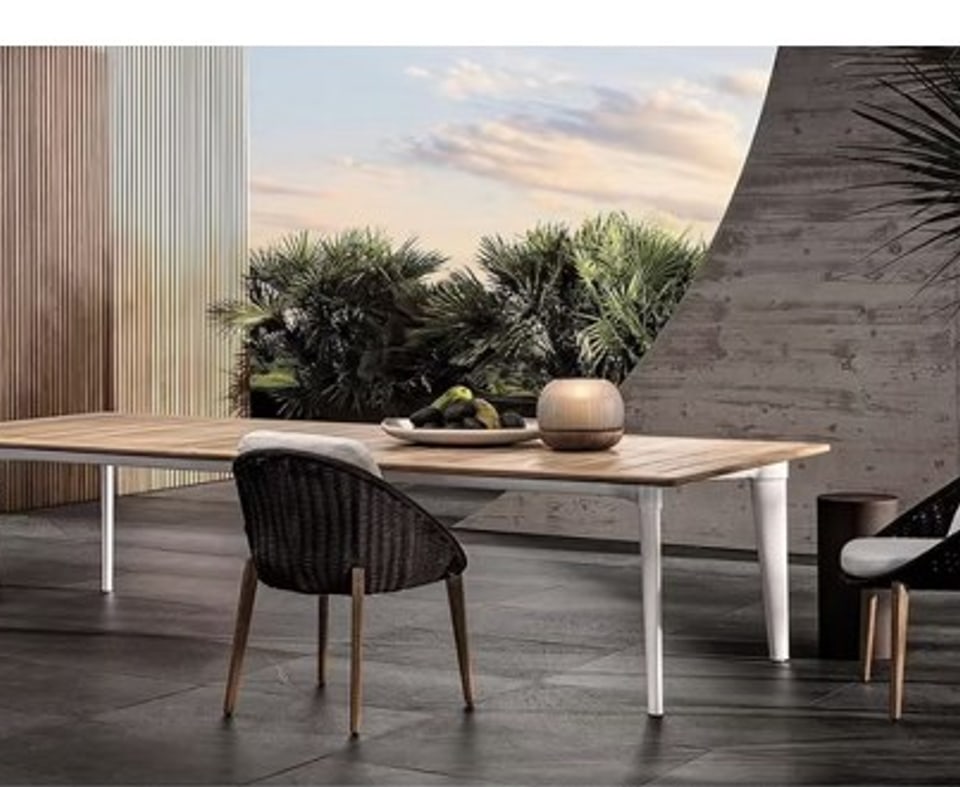
Outdoor furniture in a humid climate is exposed to more than rain. Warm air, salt, strong sunlight and repeated drying all affect the frame, finish, upholstery and hardware. The right specification balances durability with the comfort and visual softness you want from an outdoor room.
The most reliable approach is to choose the construction and materials as a complete system. A weather-resistant fabric cannot compensate for standing water in a frame, and a beautiful timber finish will not last if the piece is left without the care it needs.
Start with Exposure
Describe the site before choosing a material. Is the furniture fully exposed, under a roof, beside a pool or close to the sea? How quickly does the area dry after rain? Does the space receive direct afternoon sun? These answers determine whether you need maximum UV resistance, fast drainage, salt-resistant hardware or a finish that can be refreshed seasonally.
Compare the Main Frame Options
- Powder-coated metal offers a clean, precise look and strong structural performance. Specify a suitable coating system and stainless or corrosion-resistant hardware for coastal locations.
- Teak and other stable hardwoods bring warmth and age gracefully. They still need correct detailing, ventilation and a maintenance plan, especially where water can collect.
- Synthetic woven materials are light and relaxed, making them useful for lounge settings. Ask about UV stability, edge finishing and how the weave is secured to the frame.
- Mixed-material construction can create a more residential feel, but every junction should allow drainage and avoid trapping moisture between materials.
Upholstery Is a Construction Decision
Choose outdoor fabrics for their performance as well as their colour. Look for solution-dyed fibres, strong lightfastness and a weave that feels comfortable against the skin. Seat cushions should use quick-dry construction where possible, with drainage through the cover and foam rather than a sealed base that holds water.
Cushion shape matters too. A slight pitch helps water run off, while removable covers make cleaning and seasonal storage easier. Always ask how the fabric should be cleaned and whether replacement covers can be made later.
Design for Air and Drainage
Good outdoor furniture lets air move through it. Raised bases, open slats and considered gaps help surfaces dry; concealed drainage paths prevent water pooling inside frames. Avoid placing a solid panel directly on a wet terrace unless the design includes a clear way for water to escape.
Ask These Questions Before Ordering
- Which coating, timber treatment or protective finish is specified for this climate?
- Are the fasteners and internal fixings suitable for humidity or salt air?
- How does water leave the frame and cushions after heavy rain?
- What care is required, and which parts can be replaced or refinished?
- Can the maker provide material samples and construction details before production?
A terrace, garden or poolside space should feel as considered as the rooms inside. Meimi&H develops made-to-order outdoor lounges, dining sets and daybeds with the dimensions, materials and finish suited to each project. Share your site conditions and references with our team, and we can recommend a practical specification before you commit.
If you're planning a bespoke piece or a whole-home interior, we'd love to hear about it.